About St. John Neumann
The story of St. John Nepomucene Neumann (pronounced NOY-mann) is, in many ways, the story of the Catholic Church in nineteenth-century America. He arrived in the United States as a young immigrant priest with little money, limited knowledge of English, and no certainty about what the future would hold. Yet through extraordinary faith, tireless work, and unwavering dedication to God's people, he became one of the most influential Catholic leaders in American history and, ultimately, the first male citizen of the United States to be canonized a saint.
Early Life and Arrival in America
John Nepomucene Neumann was born on March 28, 1811, in the small town of Prachatitz in Bohemia, then part of the Austrian Empire and today located in the Czech Republic. The current term for his home country is now "Czechia." His parents, Johann Neumann and Agnes Lebishch Neumann, raised six children in a devout Catholic household. From a young age, John displayed exceptional intelligence and a strong desire to become a priest. Feeling called to the priesthood, he entered seminary studies and completed his theological training in Budweis. However, upon graduation, he encountered an unexpected obstacle. His diocese already had more priests than available assignments, and his ordination was delayed indefinitely.
Many young men might have become discouraged, but Neumann believed God was calling him elsewhere. Reports from the United States described a young nation, where bishops desperately needed priests to minister to the expanding immigrant populations. Vast areas of the country had only occasional access to the sacraments, and bishops were pleading for clergy to serve the growing Catholic population. Seeing this need, John made a courageous decision. At 25 years old, in 1836, he left his homeland and crossed the Atlantic alone, placing his future entirely in God's hands.
Arrival in the United States
When Neumann arrived in New York Harbor in 1836, he entered a country vastly different from the Europe he had left behind. The American Catholic Church was still developing, and many immigrant families lived in isolated settlements far from established churches. Shortly after his arrival, Bishop John Dubois of New York recognized the young immigrant's potential and ordained him to the priesthood on June 25, 1836, at Old St. Patrick's Cathedral in New York City. He became one of thousands of immigrant priests whose ministry helped establish the Catholic Church in the United States.

Priest on the American Frontier
Father Neumann's first assignment took him to the frontier regions of western New York near Buffalo. The challenges he encountered were immense. His parish territory stretched across hundreds of square miles of forests, farms, and scattered settlements. There were few roads and fewer churches. Catholics often lived miles apart, and many families might see a priest only a few times each year.
Undeterred, Father Neumann embraced the hardships of missionary life. He traveled tirelessly on horseback and on foot, often through snowstorms, rain, and difficult terrain. He visited homes, celebrated Mass in makeshift chapels, baptized children, blessed marriages, and brought comfort to the sick and dying. His dedication became legendary. He would rise before dawn, travel long distances to minister to families, and then continue late into the evening, all while maintaining a humble and cheerful disposition. His missionary travels often exceeded several thousand miles annually. Stories abound of Neumann crossing snow-covered roads and remote wilderness areas simply to bring the sacraments to isolated Catholics.
One of Father Neumann's greatest gifts was his ability to communicate with immigrants from many backgrounds. He mastered numerous languages, including German, English, Czech, Italian, French, and Spanish. This allowed him to minister directly to immigrants in their native tongues, helping them feel welcomed and understood in a new and unfamiliar land. At a time when millions of immigrants were arriving in America, Neumann's linguistic abilities made him uniquely effective as a missionary priest.
First Redemptorist in America and Missionary to Ohio
After several years of frontier ministry, Father Neumann sought a religious community that shared his passion for missionary work. In 1842, he joined the Congregation of the Most Holy Redeemer, commonly known as the Redemptorists. The Redemptorists were dedicated to preaching missions and serving those who were spiritually neglected, making them a natural fit for Father Neumann's talents and aspirations. They welcomed Father Neumann that October in Pittsburgh. He became the first Redemptorist to profess vows in the United States.
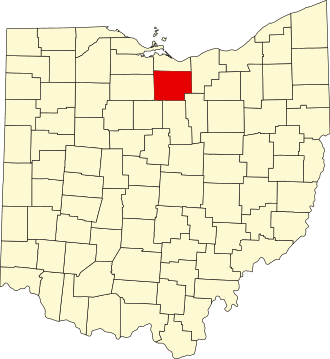
Before taking his final profession, he served as a Redemptorist novice missionary for three months in 1841 in Northern Ohio, and was based at St. Alphonsus Church south of Norwalk, Ohio (Huron County). Father Neumann performed Mass in a frontier log cabin, which has been restored and maintained on the grounds of St. Alphonsus Church, along with a prayer garden and rosary walk. A medal commemorating the dogma of the Immaculate Conception of the Blessed Virgin Mary held December 8, 1854 was found in the cabin during the dismantling of the home. Bishop Neumann was able to return to Europe for the celebration and sent the Carabin family the medal that was found in the rafters.
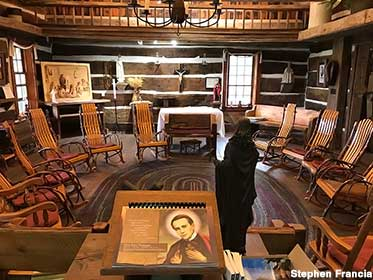
For more information about the St. John Neumann Prayer Center at St. Alphonsus click here. As a Redemptorist, he served in several important assignments and gained a reputation as an outstanding preacher, organizer, and spiritual leader. His superiors quickly recognized his leadership abilities, and he played a significant role in the growth of the Redemptorist order in America. Yet despite his increasing responsibilities, he remained remarkably humble. He preferred simple living and never sought recognition or advancement.
Bishop of Philadelphia
Father Neumann became a U.S. citizen in Baltimore on February 10, 1848, and served for years as a missionary in Maryland, eventually being named the Redemptorists’ provincial superior for the United States. In 1852, Pope Pius IX appointed Father Neumann as the fourth Bishop of Philadelphia. The appointment came as a surprise to Bishop Neumann himself, who reportedly attempted to decline the honor. Nevertheless, he accepted the Holy Father's decision and began what would become the most significant chapter of his life.
The Diocese of Philadelphia was one of the largest and fastest-growing dioceses in the United States. Thousands of Irish and German immigrants were arriving each year, creating enormous pastoral challenges. Catholic churches were overcrowded, schools were insufficient, and anti-Catholic prejudice remained a serious concern. Bishop Neumann inherited a diocese that needed vision, organization, and strong leadership.
Bishop Neumann worked tirelessly to meet these challenges. He established new parishes throughout the diocese, oversaw the construction of churches, and encouraged the growth of religious communities. However, his greatest achievement was his commitment to Catholic education. Bishop Neumann firmly believed that Catholic children needed schools where academic excellence and religious formation could be integrated.
Under his leadership, Philadelphia developed one of the most extensive Catholic school systems in the nation. He recruited teaching sisters, established educational standards, and expanded opportunities for Catholic children to receive a faith-based education. By the end of his episcopate, nearly 100 Catholic schools operated throughout the diocese. His educational vision would influence dioceses across the country for generations and earned him recognition as one of the principal architects of the American Catholic school system.
His influence became particularly evident in Catholic education. As Ohio dioceses expanded their school systems during the nineteenth century, many adopted principles similar to those Neumann had implemented in Philadelphia. His vision of parish-centered education helped shape Catholic schools throughout Ohio and contributed significantly to the development of the state's Catholic communities.
Decades after his death, numerous Ohio parishes and schools were named in his honor. Among them is St. John Neumann Church. The parish's choice of patron was especially fitting. Like Neumann's Philadelphia, Sunbury and Delaware County have experienced significant population growth and the challenges of building a vibrant Catholic community in a rapidly expanding area. The saint's dedication to education, evangelization, and pastoral leadership continues to inspire the parish that bears his name.
Death and Road to Canonization
On January 5, 1860, Bishop Neumann was carrying out his ordinary pastoral duties in Philadelphia when tragedy struck. While walking along Fourth and Vine Streets in Philadelphia, he suddenly collapsed and died, apparently from a stroke. He was only 48 years old. The news spread quickly throughout Philadelphia and beyond. Thousands attended his funeral, and many people immediately spoke of his holiness. Stories of his humility, generosity, and deep spirituality continued to circulate long after his death.
In the years that followed, devotion to Neumann steadily grew. Catholics visited his tomb, sought his intercession, and shared accounts of favors received through his prayers. Eventually, the Catholic Church began the formal process of investigating his life and virtues. Historians, theologians, and Church officials examined his writings, correspondence, sermons, and eyewitness testimony. Their conclusion was clear: John Nepomucene Neumann had lived a life of heroic virtue.
The first major milestone toward sainthood came on October 13, 1963, when Pope Paul VI beatified him, giving him the title "Blessed John Neumann." Beatification recognized that he was in heaven and worthy of public veneration in certain regions and communities. For American Catholics, the ceremony represented a significant moment of pride and gratitude, highlighting one of the nation's most beloved church leaders.
The path to canonization required verification of miracles attributed to John Neumann's intercession. The Catholic Church subjected these claims to rigorous examination. Medical experts reviewed alleged healings to determine whether they could be explained by science. Theologians examined whether prayers had been directed specifically to Neumann. Only after exhaustive investigation would a miracle be approved.
One such healing involved the extraordinary recovery of a young boy suffering from a condition considered medically hopeless. Following prayers seeking Bishop Neumann's intercession, the child recovered completely and permanently. After careful review, the Vatican concluded that no natural explanation adequately accounted for the healing.
Finally, on June 19, 1977, Pope Paul VI canonized John Nepomucene Neumann in St. Peter's Square in Rome. Thousands of American pilgrims traveled to the Vatican for the historic event. During the ceremony, the Pope praised Neumann's missionary spirit, pastoral charity, humility, and dedication to immigrants and education.
His canonization was historic for several reasons. He became the first male citizen of the United States to be declared a saint by the Catholic Church and the first American bishop to be canonized. More broadly, his elevation to sainthood symbolized the maturity and vitality of the Catholic Church in the United States.
Today, the earthly remains of St. John Neumann rest at the National Shrine of St. John Neumann, where pilgrims continue to seek his intercession. The shrine is located in the lower church of St. Peter the Apostle Church at 1019 North 5th Street, in Philadelphia, Pennsylvania. More than a century and a half after his death, his legacy endures in Catholic schools, immigrant ministries, parishes, and dioceses throughout the United States. His life remains a powerful testament to what can be accomplished through faith, perseverance, humility, and a willingness to answer God's call wherever it may lead. For Catholics in Ohio and across the nation, St. John Nepomucene Neumann stands as a model of missionary discipleship and one of the foundational figures of American Catholicism.